Why Did My Sales Drop When I Raised My Price?
Sales dropping after a price increase isn't automatically a sign the increase was wrong, it's often exactly what elasticity predicts, and the real question is whether the resulting profit went up or down, not whether unit volume did. A price increase that costs you 10% of your sales volume while raising your margin 20% usually leaves you more profitable overall, even though the drop in units feels like a bad outcome in the moment.
Key Takeaways
- Some volume drop after a price increase is expected and doesn't necessarily mean profit fell, check total profit, not just units sold.
- How the increase was communicated and its size relative to your customers' usual expectations both affect how much volume actually drops.
- A history of discounting before the increase can make customers more resistant to the new, higher price than a comparable store without that history.
- Elasticity, calculated from your own sales data, predicts roughly how much volume drop to expect for a given price increase, so you can tell an expected result from a genuine problem.
- Changing multiple things at once (price, packaging, marketing) makes it hard to isolate what actually caused a sales change.
The First Question: Did Profit Actually Fall, or Just Volume?
Revenue and unit volume are not the same signal as profit. If a price increase causes fewer units to sell but each unit now carries meaningfully more margin, total profit can rise even while the sales count on your dashboard looks worse. Before treating a volume drop as evidence the increase was a mistake, calculate what happened to total profit specifically, not just the more visible unit count.
Some Drop Is Expected, and Elasticity Tells You Roughly How Much
If your product's elasticity is -1.2, a 10% price increase predicting roughly a 12% drop in units isn't a surprise, it's the model working as expected. The real red flag isn't a drop matching what elasticity predicted. It's a drop meaningfully larger than what the number suggested should happen, which points to something else going on beyond ordinary price sensitivity.
Reasons the Drop Might Be Larger Than Expected
The size and framing of the increase
A sudden, large jump (30% or more) can shock a customer base accustomed to a stable lower price in a way a smaller, more gradual increase wouldn't. How the change is communicated matters too. Explicitly warning customers a price increase is coming, without a clear reason attached, can itself suppress demand independent of the new price.
A history of prior discounting
If customers were previously trained to expect frequent discounts, raising the regular price can trigger more resistance than it would for a store with a stable pricing history. Discounting can lower perceived value in a customer's mind, making it harder to justify a higher price later, even if the higher price is entirely fair for the product.
Changing more than one thing at once
If the price change happened alongside a marketing shift, a packaging change, or a different acquisition channel mix, isolating the price as the actual cause becomes difficult. A drop that looks like a pricing problem might actually be a marketing or channel problem wearing a pricing costume.
| Observed drop vs. elasticity prediction | Likely explanation |
|---|---|
| Roughly matches the predicted drop | Normal price sensitivity; check total profit before assuming it's a problem |
| Meaningfully larger than predicted | Something else at play: framing, discount history, or a confounding change made at the same time |
| Smaller than predicted | Demand may be less elastic than the model estimated, or a confidence-thin estimate needs more data |
How to Actually Check This on Your Own Store
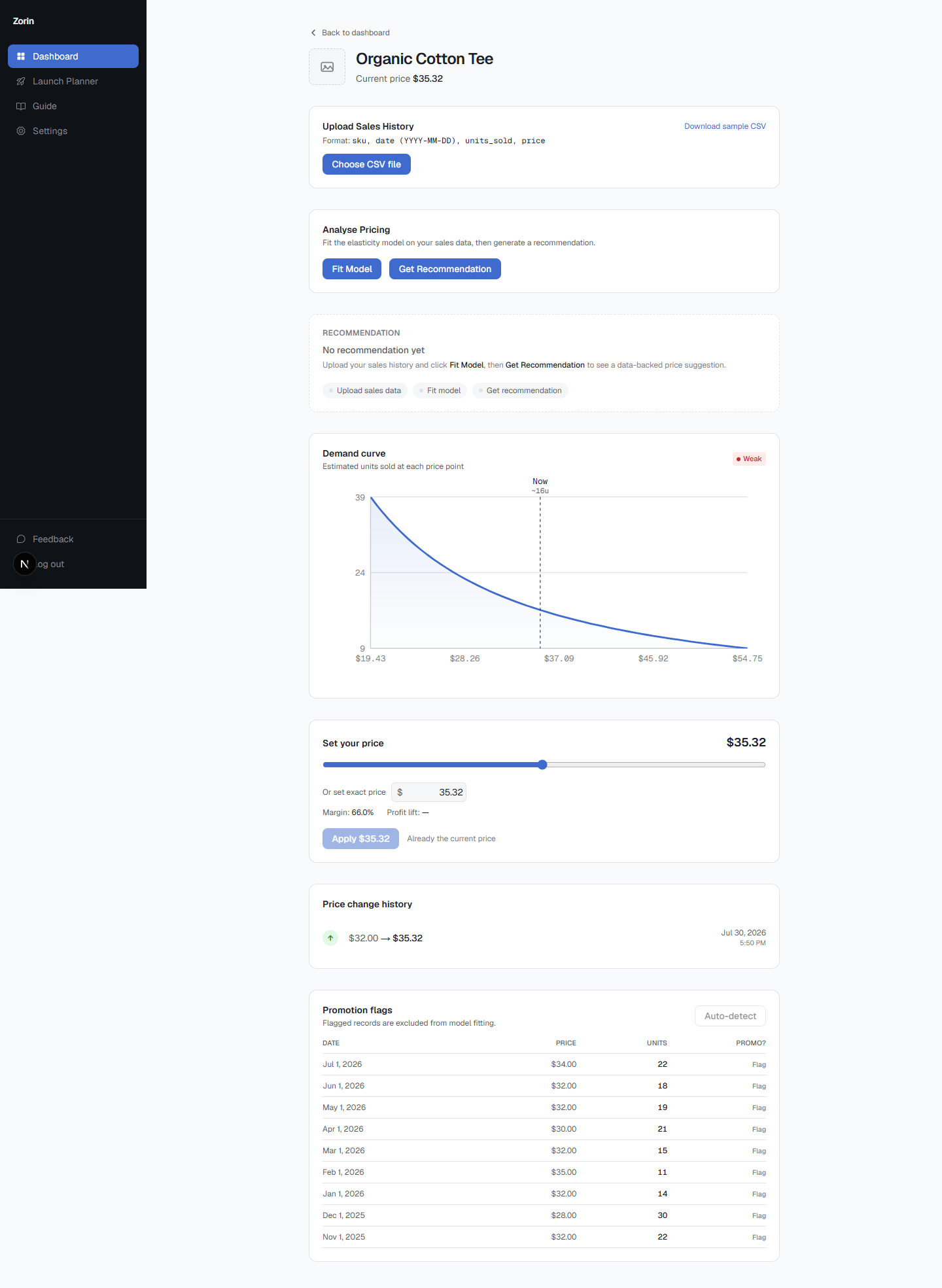
Compare your product's actual elasticity, calculated from its own price and quantity history, against the drop you observed after the increase. If the observed drop tracks closely with what the elasticity number predicted, the increase is behaving exactly as expected, and the profit outcome, not the volume outcome, is what determines whether it was the right call. If the drop is meaningfully larger, look for a confounding factor (framing, discount history, a simultaneous change elsewhere) before concluding the price itself was wrong.
What to Do Next
If profit rose despite the volume drop, the increase likely worked as intended, and reverting would give back real margin for no clear reason. If profit fell and the drop outpaced what elasticity predicted, consider whether the increase was framed poorly, came too soon after heavy discounting, or coincided with an unrelated change worth untangling before adjusting the price again. Either way, the decision should follow what the data shows happened, not just how the volume number felt in the moment.
If you haven't calculated your own product's elasticity yet to make this comparison, here's how, and if you want to check whether other products in your catalog have a similar gap between expected and actual performance, connect your sales history and review the full picture.
Frequently Asked Questions
Why did my sales drop when I raised my price?
Some drop is expected and predicted by your product's elasticity. Check whether total profit rose or fell, not just whether unit volume dropped, before concluding the increase was a mistake.
Is a sales drop after a price increase always bad?
No. If the resulting margin increase more than offsets the lost volume, total profit can rise even though the unit count looks worse.
How much of a drop should I expect from a price increase?
Roughly what your product's elasticity predicts. A 10% price increase on a product with -1.2 elasticity predicts around a 12% drop in units, for example.
What if the drop is bigger than elasticity predicted?
Look for a confounding factor: how the increase was framed to customers, a history of prior discounting that trained lower price expectations, or another change made around the same time.
Does prior discounting make future price increases harder?
Often, yes. Frequent past discounts can lower perceived value and anchor customers to a lower price, making a later increase feel like a bigger jump than the same increase would for a store without that history.
Should I revert a price increase if sales drop?
Only if total profit also fell and the drop can't be explained by expected elasticity. If profit rose despite fewer units, reverting usually gives back real margin unnecessarily.
How do I isolate the price as the actual cause of a sales change?
Avoid changing marketing, packaging, or channel mix at the same time as a price change, so any resulting shift in sales can be attributed to the price with more confidence.
A drop in sales after a price increase is data, not automatically a verdict. Compare it against what your product's own elasticity predicted, check total profit rather than unit count, and only treat it as a real problem if the numbers actually say so.
Written by Dexter
Dexter is part of the team at Zorin, building tools that help ecommerce merchants price with data instead of guesswork.