Should I Raise Prices to Cover Rising Costs?
Usually, yes, if your supplier costs, fees, or fulfillment expenses have genuinely risen, absorbing that increase indefinitely just shrinks your margin quietly instead of addressing it directly. The harder question isn't whether to raise prices, it's how much and how fast, since a poorly timed or oversized increase can cost you more in lost customers than the cost increase itself would have.
Key Takeaways
- Absorbing a real, sustained cost increase without adjusting price simply shrinks your margin over time rather than solving the underlying problem.
- Small businesses generally have less room to absorb rising costs than larger companies, making pass-through more necessary, not less.
- Timing and framing matter: raising prices too abruptly, without a clear reason communicated, risks losing customers you didn't need to lose.
- Your product's elasticity tells you how much of the cost increase can realistically be passed through without a disproportionate volume loss.
- Cost management (renegotiating supplier terms, cutting non-essential spend) is a complement to a price increase, not a full substitute for one.
Why Absorbing Costs Indefinitely Isn't Actually Neutral
It can feel safer to hold your price steady and absorb a cost increase rather than risk upsetting customers with a higher number. But holding price steady while costs rise isn't a neutral choice, it's a slow, quiet decision to shrink your margin every single sale, indefinitely, until you eventually address it. Small businesses in particular tend to have less margin cushion to absorb rising costs than larger companies, which makes this trade-off more urgent, not less.
The Real Question: How Much and How Fast, Not Whether
Once a cost increase is real and sustained, not a temporary blip, the decision to eventually pass some of it through is usually necessary for the business to stay healthy. The genuinely important decisions are about size and timing: raising prices too abruptly or too far beyond what the increase actually warrants risks losing customers who would have tolerated a smaller, better-timed adjustment.
Let Elasticity Set the Ceiling on What's Realistic
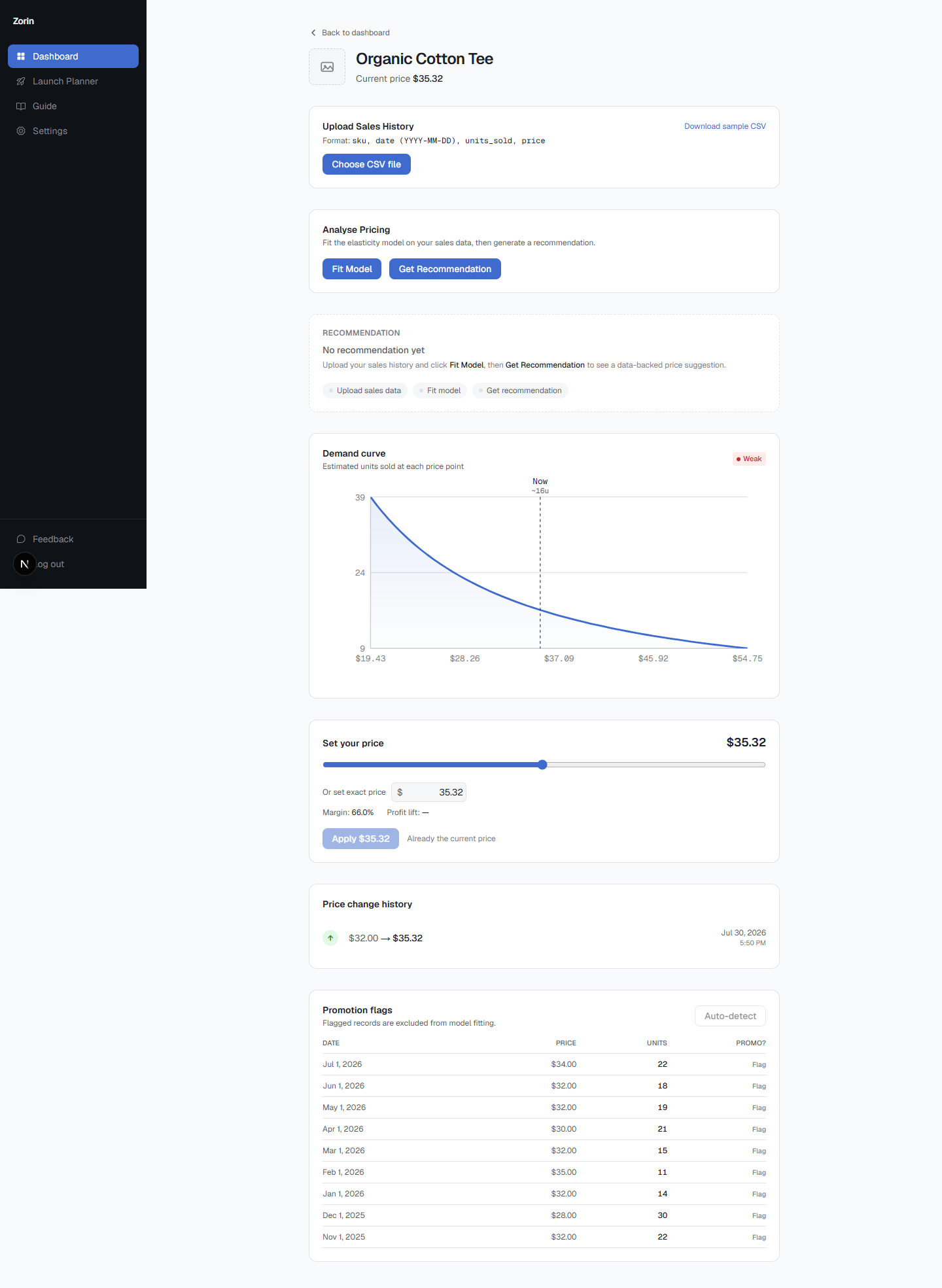
Your product's elasticity, calculated from its own sales history, tells you roughly how much volume you'd expect to lose for a given price increase. If demand is fairly inelastic, a cost-driven increase can likely be passed through close to fully without a disproportionate hit to volume. If demand is highly elastic, passing through the full cost increase risks losing more in volume than the increase gains in margin, and a partial pass-through, absorbing some of the cost yourself, may be the more profitable choice even though it feels less "fair" on paper.
| Elasticity signal | What it suggests for cost pass-through |
|---|---|
| Low elasticity (inelastic) | Passing through most or all of the cost increase is likely to preserve or improve total profit |
| High elasticity (elastic) | Full pass-through risks a bigger volume hit than the cost increase justifies; consider partial absorption |
Timing and Framing Matter More Than Most Merchants Expect
A sudden, large price jump can shock customers accustomed to a stable price in a way a smaller, better-timed increase wouldn't, independent of whether the new price is objectively justified by real cost increases. It's also worth watching competitors' pricing as a reference point, since raising prices well ahead of comparable stores, without a clear reason, risks losing price-sensitive customers to an alternative that hasn't moved yet.
Cost Management Isn't a Substitute, But It Helps
Before or alongside a price increase, it's worth exploring whether some of the pressure can be relieved without touching price at all: renegotiating supplier terms, consolidating orders for bulk pricing, or cutting non-essential spend. None of this replaces a genuinely necessary price increase if input costs have risen meaningfully, but it can reduce how much of the increase actually needs to reach the customer.
A Practical Sequence for a Cost-Driven Increase
- Confirm the cost increase is real and sustained, not a temporary spike that might reverse on its own.
- Check what cost relief is available elsewhere first (supplier terms, non-essential spend) before assuming the full increase must be passed through.
- Use your product's own elasticity to estimate how much of the increase can be passed through without a disproportionate volume loss.
- Size and time the increase deliberately rather than reacting abruptly the moment costs rise.
- Watch the actual outcome against what elasticity predicted, the same way you would for any other price change.
If you want to know how much of a specific cost increase your own customers would likely tolerate, calculate your product's elasticity first, or connect your sales history to see it directly.
Frequently Asked Questions
Should I raise prices to cover rising costs?
Usually yes, if the cost increase is real and sustained. Absorbing it indefinitely just shrinks your margin quietly rather than addressing the underlying problem.
How much of a cost increase should I pass through to customers?
It depends on your product's elasticity. Low elasticity supports passing through most or all of the increase; high elasticity may make partial absorption more profitable overall.
Is it risky to raise prices during inflation?
The bigger risk is usually in the size and timing of the increase, not the decision to raise prices at all. A sudden, large jump is riskier than a smaller, well-timed one.
Should I check competitor prices before raising mine?
It's worth being aware of where competitors sit, since raising prices well ahead of comparable stores without a clear reason risks losing price-sensitive customers to an alternative.
What can I do besides raising prices to manage rising costs?
Renegotiating supplier terms, consolidating orders for bulk pricing, and cutting non-essential spend can relieve some pressure, though they rarely replace a genuinely necessary price increase entirely.
Do small businesses have less room to absorb rising costs than large ones?
Generally yes, which makes timely, deliberate price adjustments more important for small businesses, not less, compared to larger companies with more margin cushion.
How do I know if a cost increase is temporary or worth reacting to?
If it's sustained across more than one order cycle and doesn't look like a one-off supplier or shipping fluctuation, it's usually worth treating as a real, ongoing cost change.
Raising prices to cover a real, sustained cost increase usually isn't the risky part, it's the size and timing of the increase that determines whether it protects your margin or costs you more in lost customers than the original cost increase would have. Let your product's own elasticity guide how much is realistic.
Written by Dexter
Dexter is part of the team at Zorin, building tools that help ecommerce merchants price with data instead of guesswork.